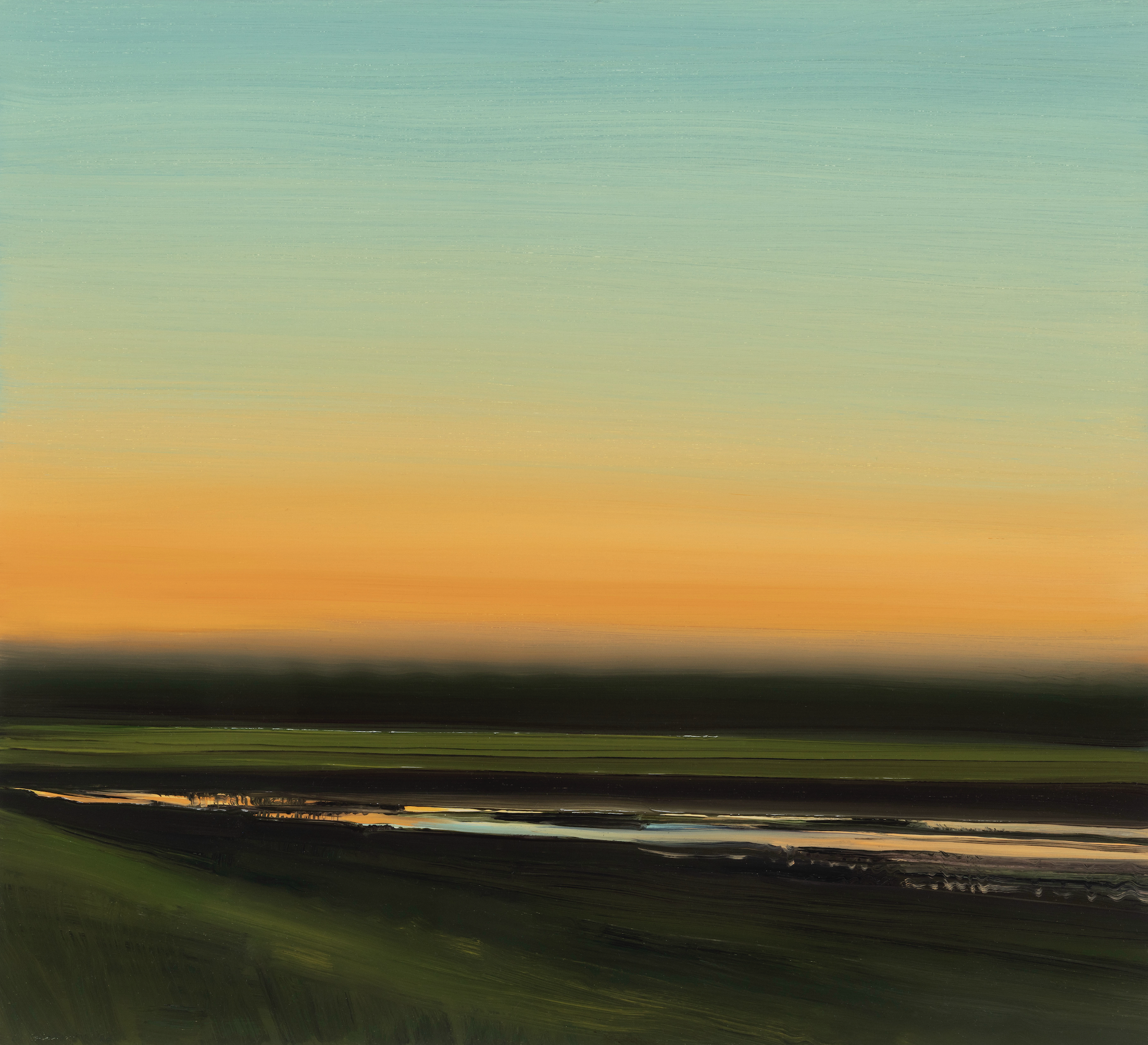
River Becoming/Becoming River
9/11/2026 – 10/17/2026
I chose the title River Becoming/Becoming River, because the Kansas River is a process, forever recreating itself. And as a rivering human, adventuring along the river and exploring it from various angles, not to mention drinking its waters from my tap, I am surely becoming the river.
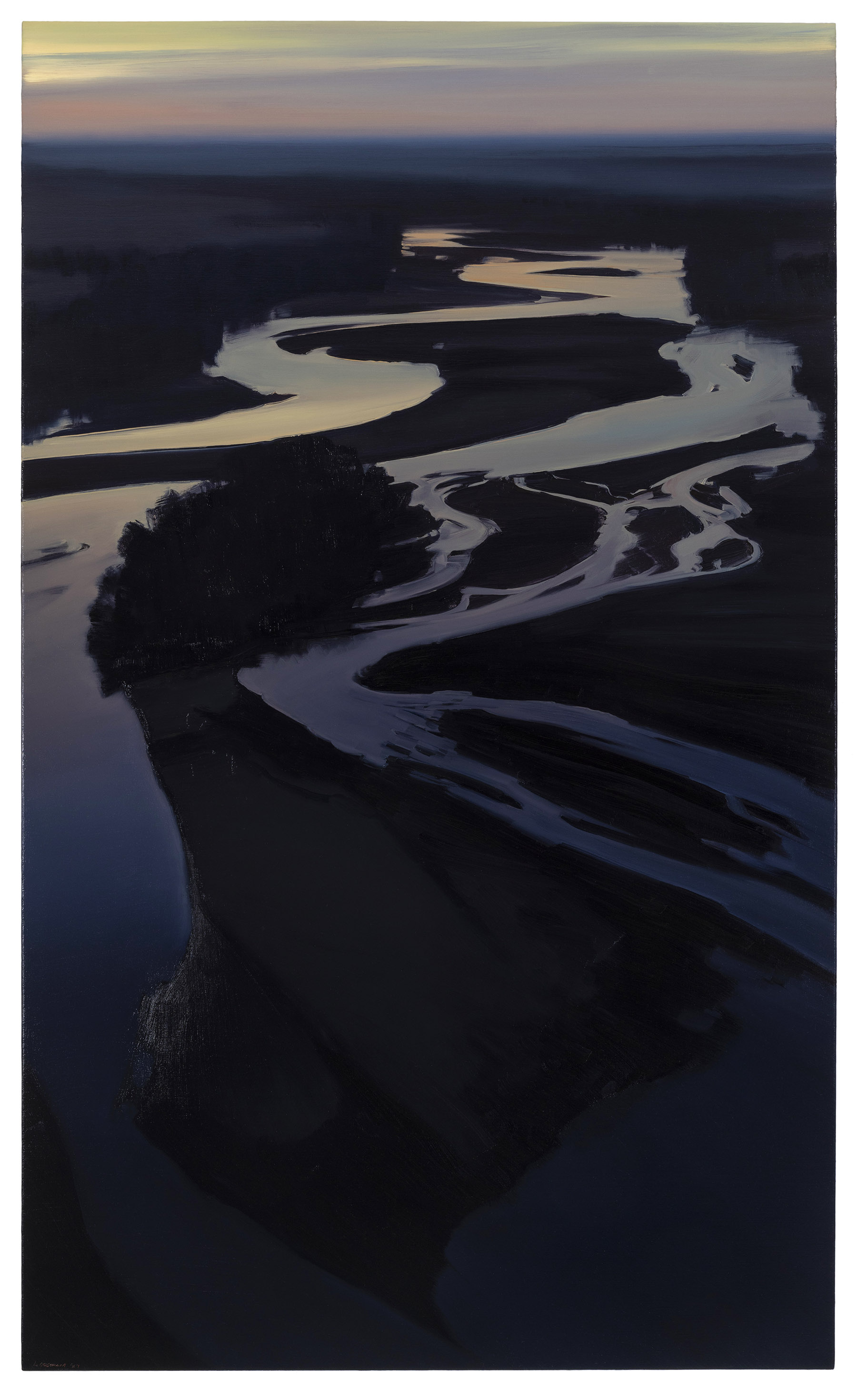
My work is typically determined by the weather; maybe drought has revealed intricate sandbars on the river, or floodwaters have obscured them. Though the paintings may be static images, they investigate fluvial processes that coax sand into unbelievable formations and reshape the river along its 173-mile course from Junction City, Kansas, to Kansas City, Missouri.
I’m inspired by the Kaw’s beauty, but also how the river has become what it is today and the changes I’ve witnessed over thirty years, albeit a blip in geologic time. It can be dramatic, minute to minute, day to day, over years and thousands of years. Its self-organizing powers are on display and worthy of our attention and appreciation.
The oil paintings in this show focus on the dynamic sandbars of the Kansas River. In recent years, I’ve had many opportunities to capture aerial photography midriver at low flows, and I never tire of observing ever-shifting permutations of sand, naturally pleasing in their compositions. The Night River paintings remind us that the river is flowing ceaselessly, whether we notice or not.
Observing the river from above or from my kayak, I’m mesmerized by currents shaping sand, carving bars, and creating complicated patterns and ripples. I wanted to engage in a process that would connect me, in a very simplistic way, to this endless shapeshifting, acting as river, in my Sandbar Permutations project. I coated metallic papers with pewter-colored paint and used spatulas to spontaneously draw/remove paint as if I was the water, cutting through, shaping sand. I trimmed the paintings and mounted them on a panel in sequences that convey a sense of flow, and you may recognize some of the same sandbars in the oil paintings.
I’ve also developed a deep affection for the floodplain scrolls, also called meander scars or ghosts—and geologists do refer to them as ghosts—that so beautifully illustrate the story of our river over the last two thousand years or so. Using LiDAR, aerial mapping technology that reveals exquisite detail of Earth’s landforms, one can easily see the complicated layering of river meanderings across the floodplain, which is four miles wide in places.
Weather and human industry have all but erased the scrolls in places, yet many persist. After rains they become temporary wetland habitat for soft-bodied creatures and shorebirds, though they are the bane of farmers, who annually attempt to plow them into productive cropland. These are some of the richest, deepest topsoils in the world, and they have been cultivated, planted, and poisoned for a good 160 years, so healthy wetlands, they are not. County roads cut through the scrolls and power lines crisscross the air above from the nearby Evergy coal-fired plant. Since the Kansas River’s legendary floods of 1951, elaborate levee systems have been built, and the ghosts are now only revived by heavy rains.
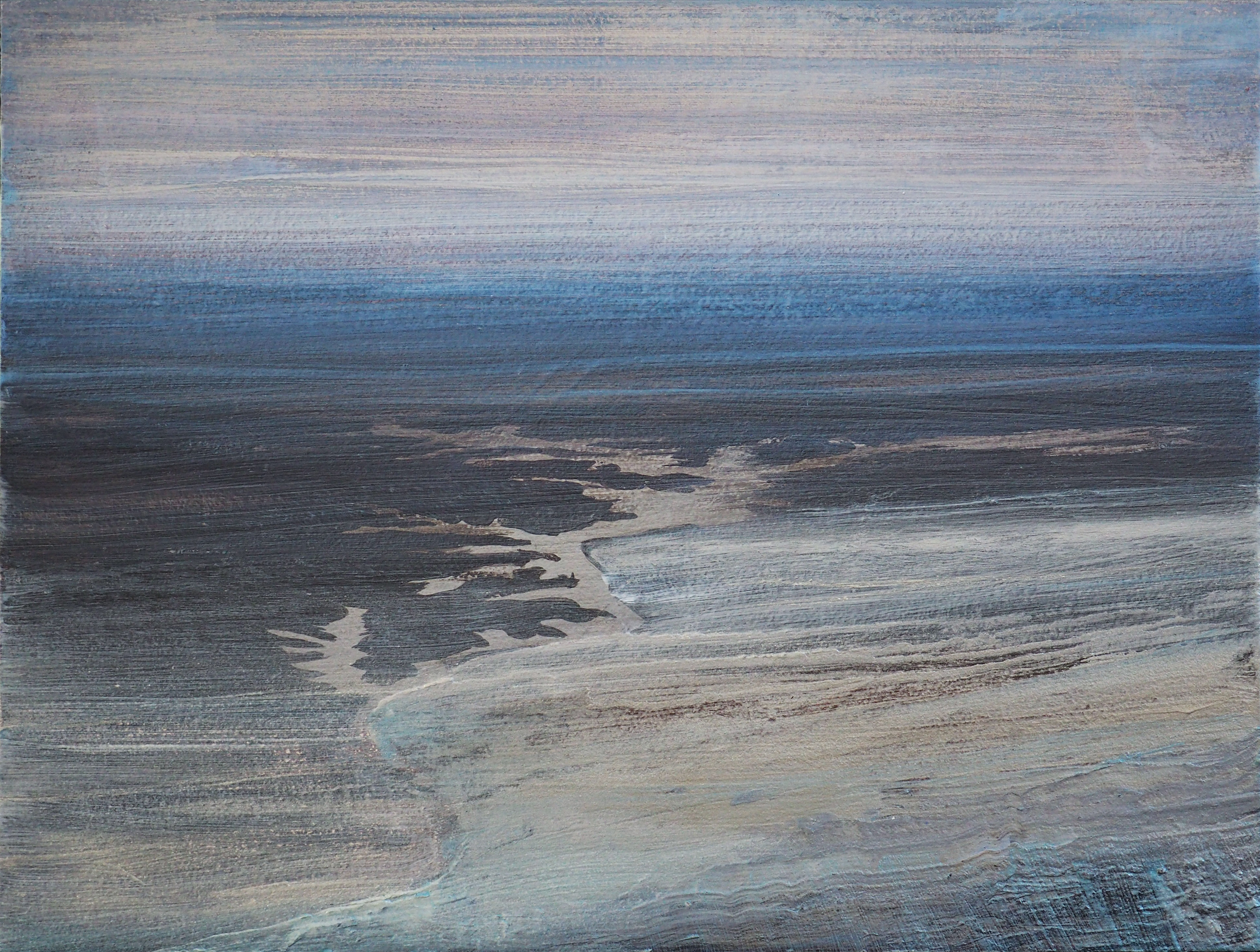
My floodplain ghost projects include three plein air (on location) paintings from June 11 and 15, along with photographs and drone footage I took on those dates as well as on August 1 and 2, 2026. Heavy summer storms saturated the North Lawrence floodplain, filling vast perennial meander scars. I chose to focus on a particular scar along the levee near river mile 54, which is extremely subtle when seen from aerial photographs in dry periods, but prominent when filled with rainwater. The painted panels in Floodplain Ghost Remembering depict this site from multiple vantage points over three evenings.
When I realized this site was flooded, I drove out to paint it at sunset. I was astounded by how much it looked like the river in the waning light and how beautiful this humble wetland swale could be. These are the kinds of ghosts I can believe in. Their comings and goings, their attempts to be river again, struck me as the scar remembering when it was the river. And they very well could become the river again with a major flooding event. I even witnessed an old scroll filled to the brim, rippling gently over the county road, “flowing” once more, and in the appropriate direction of its ancient coursing. If you can consider rivers alive, then these floodplain ghosts were once alive as well.
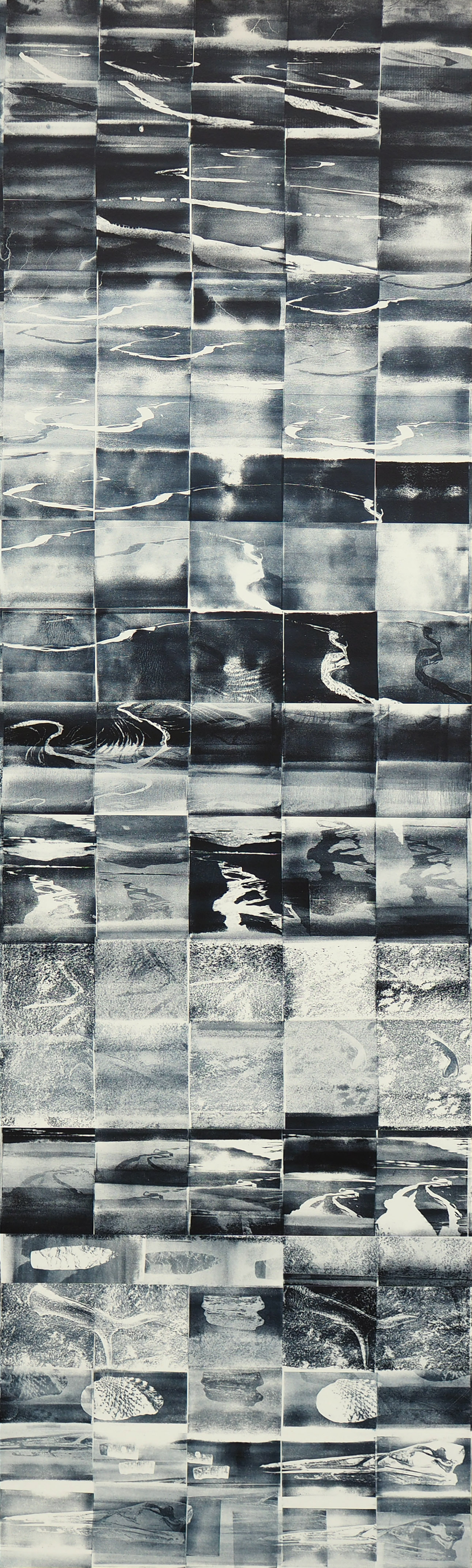
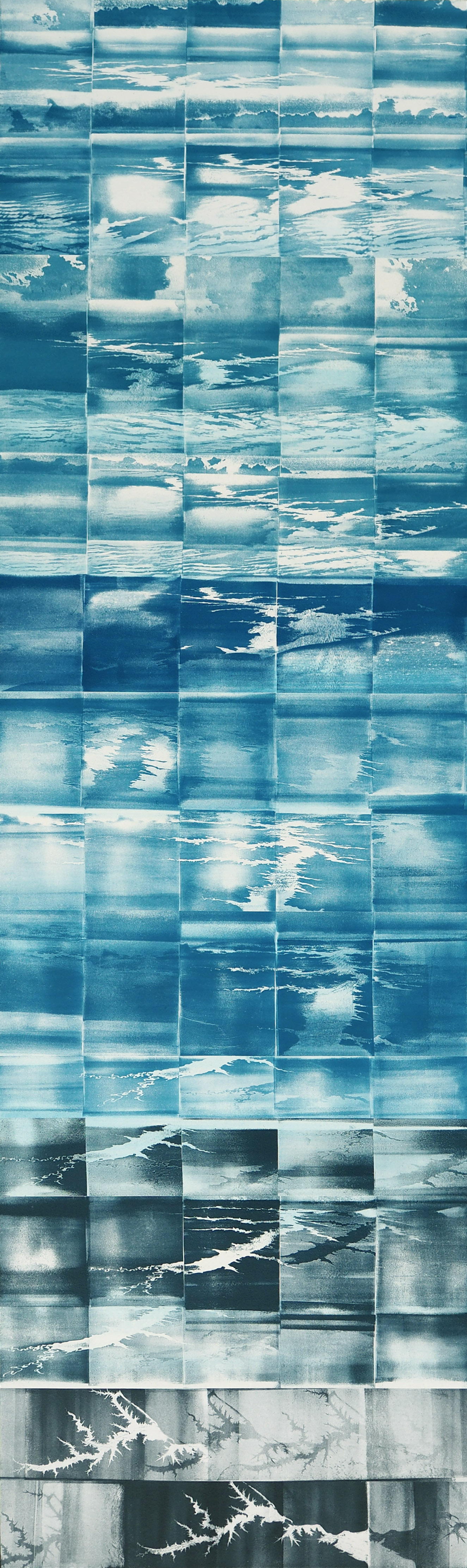
The River Becoming panels were my attempt to imagine and understand centuries of meander scar evolution through a creative process. With paint, scrapers, and squeegees, I recreated sequences as I imagined them happening, referring to my river channel maps and LiDAR imaging for reference. I scraped and gouged reflective papers, texturing them on both sides, and squeegeed charcoal-gray, bronze, and blue-gray paint across the surfaces to produce something that looked atmospheric and eerily like the banks and swales undulating across the floodplain, over deep time.
More by Lisa Grossman (View All)
-
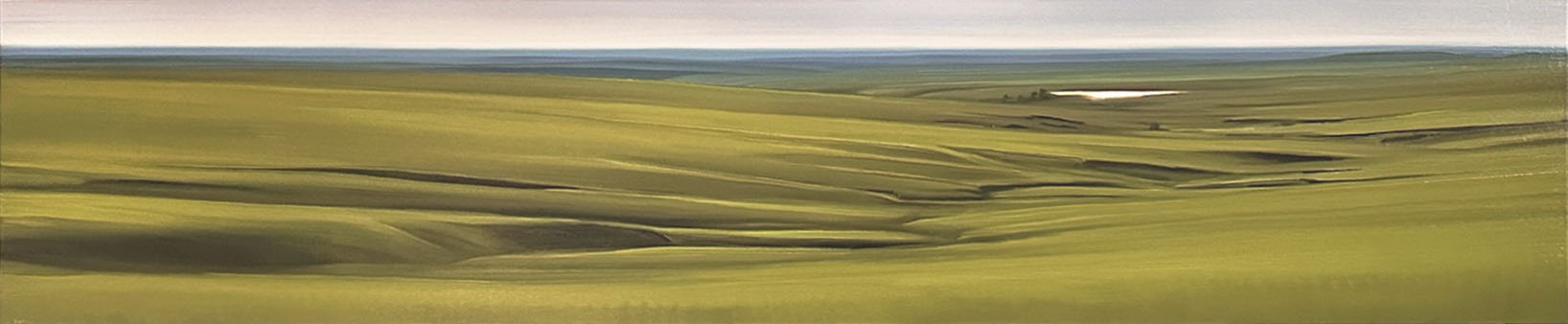
O'PRAIRIE, 2026
-
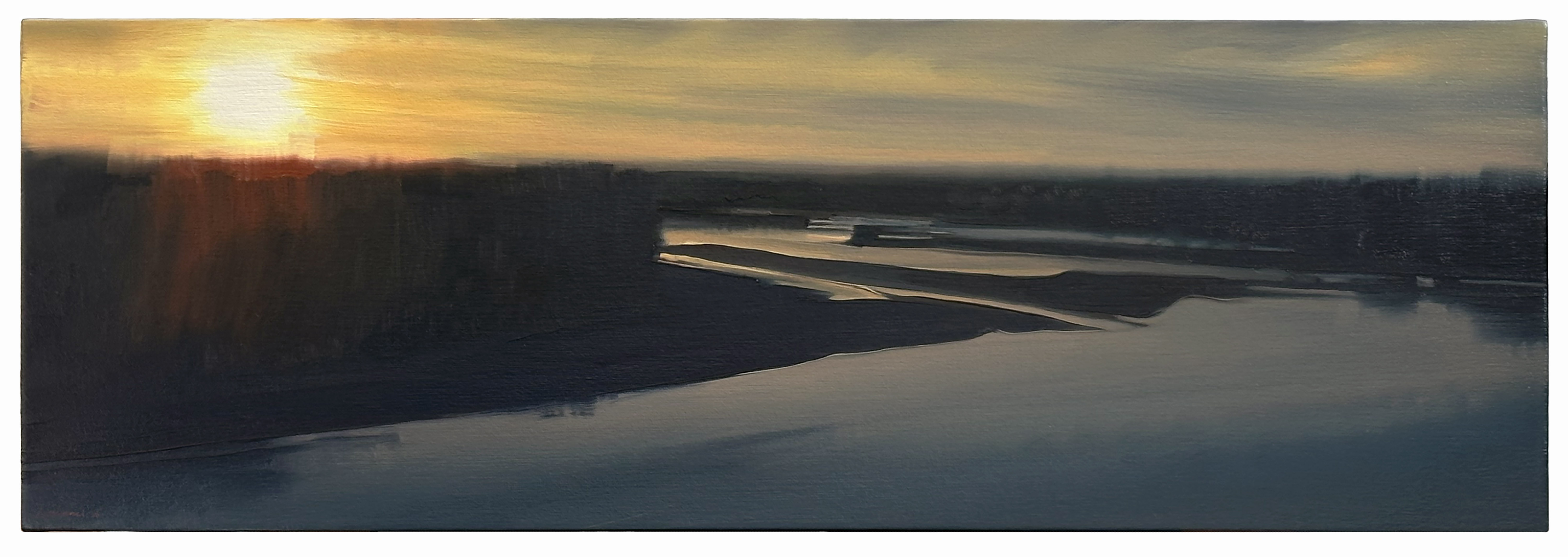
October Sundown on The Kaw, 2026
-
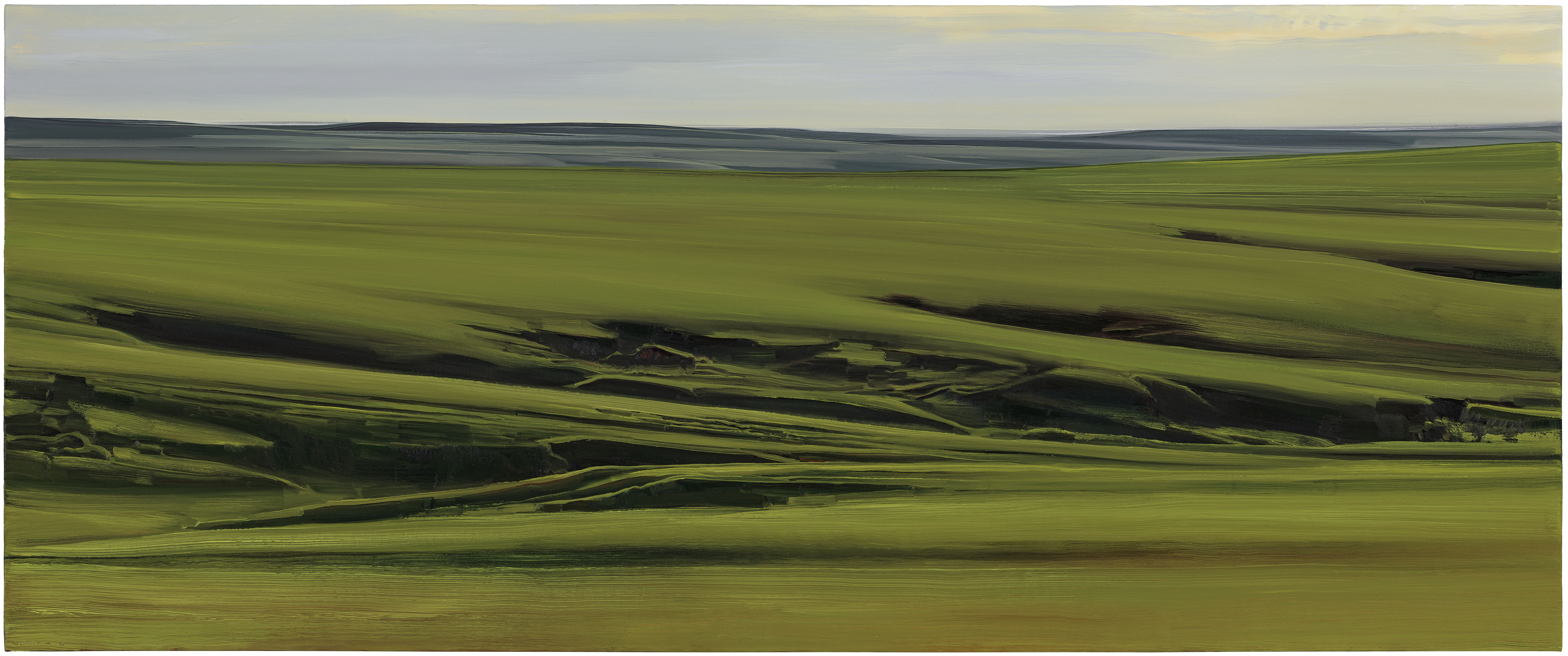
Wabaunsee Watershed, 2025
-
Sandbars - Upriver, Lecompton, 2024
-
Evidence, 2023
-
Glaciers in Kansas - Kaw Lake, 2023
-

Meander Scars - Kansas River, 2023
-
Ancestral Kaw Lake - Blue 1, 2022
-
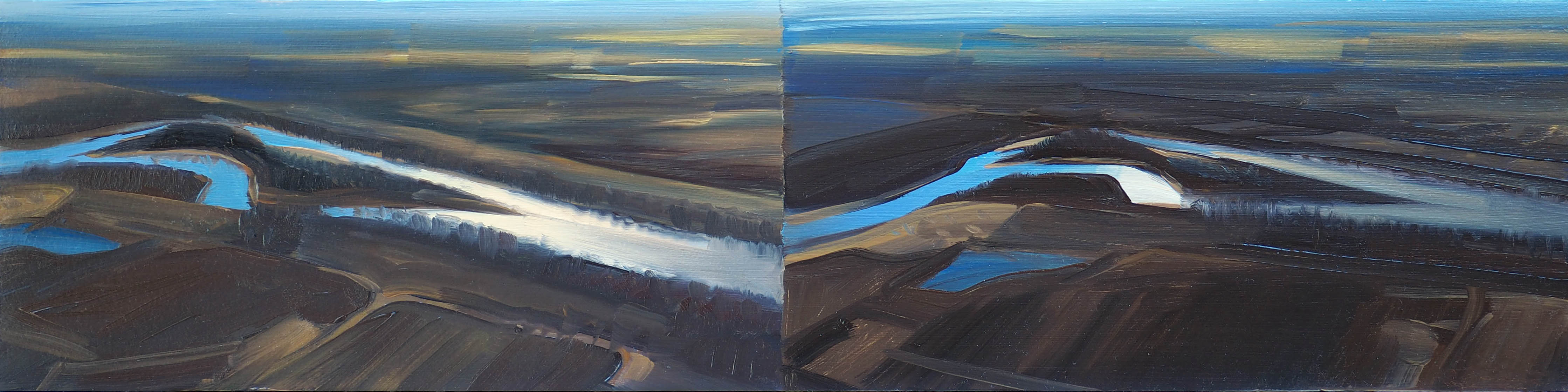
Mud Creek--River Mile 47 (RM47.2017.1), 2021
-
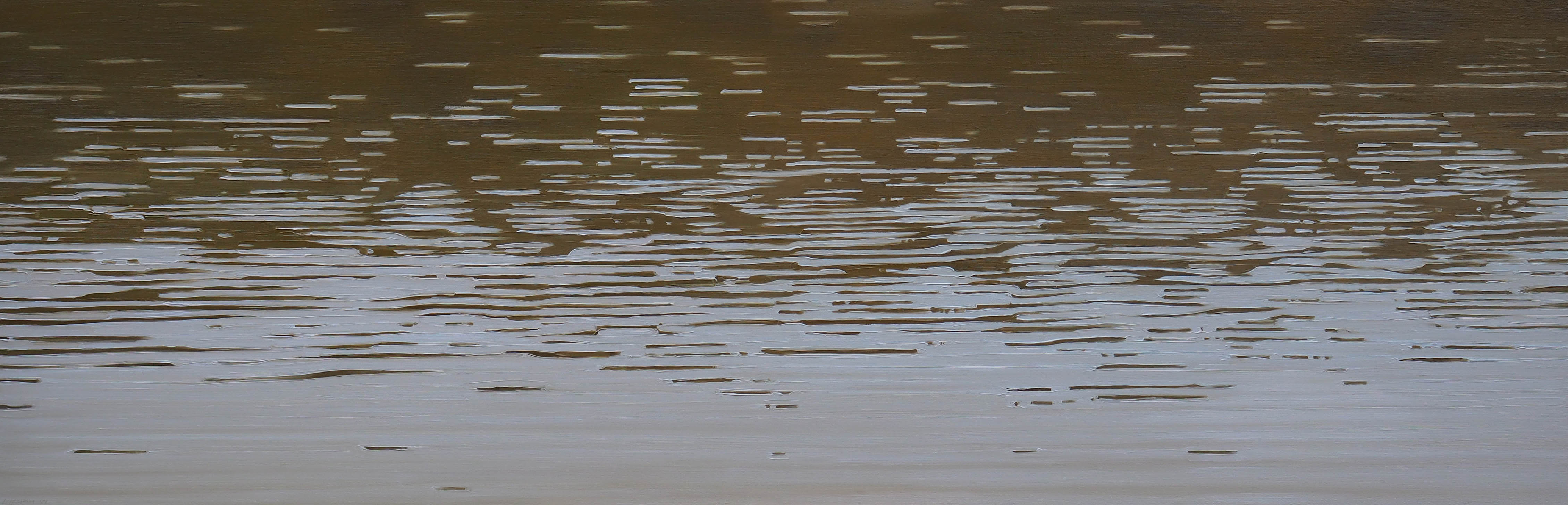
On the Surface, 2021
-
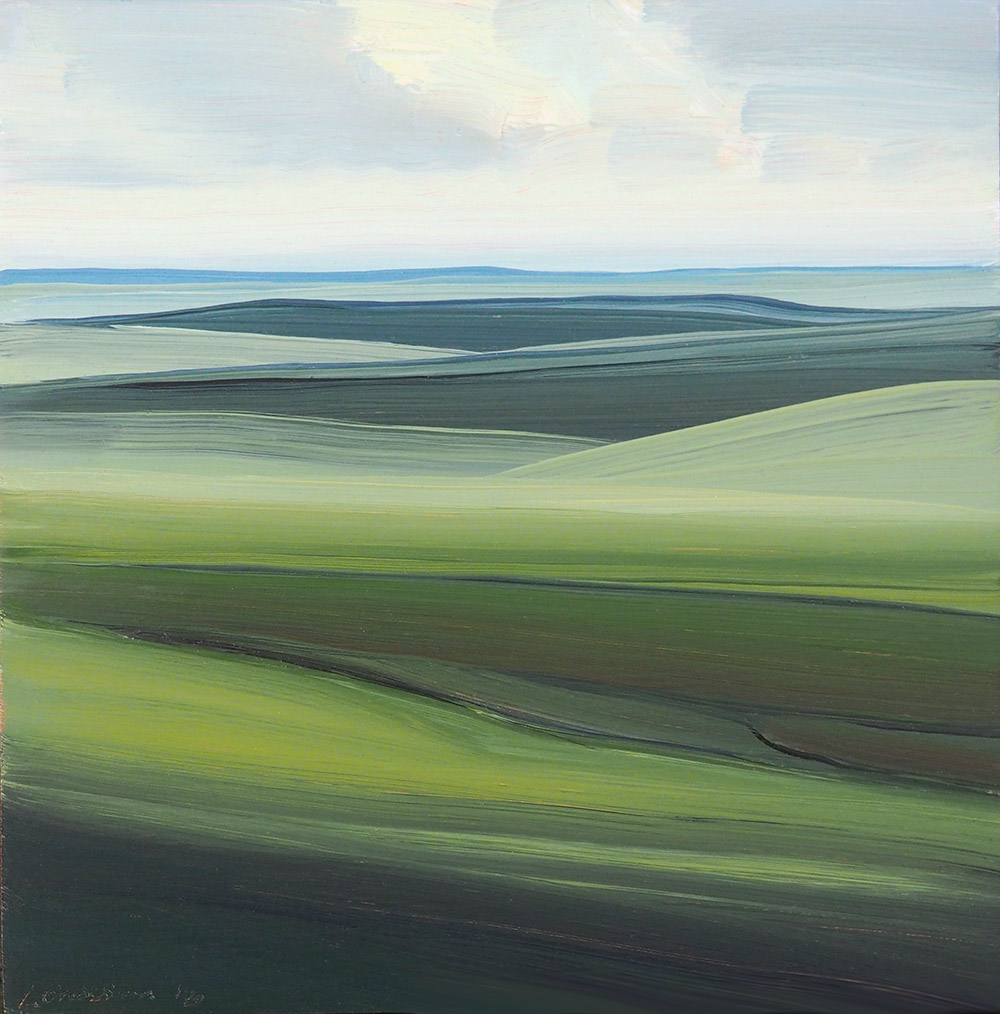
High Summer Sketch, 2020
-
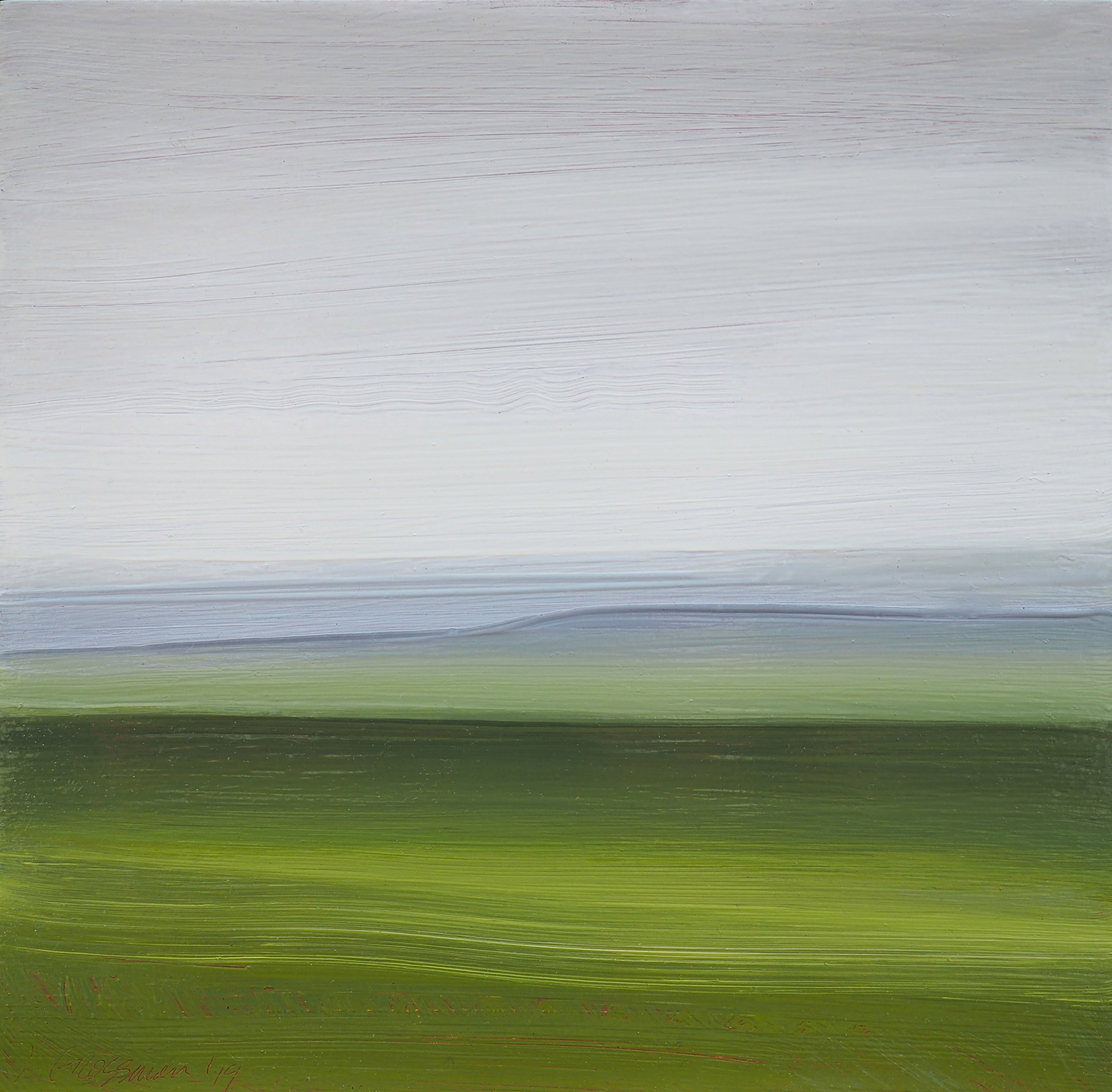
Rain Sketch 1, 2019